


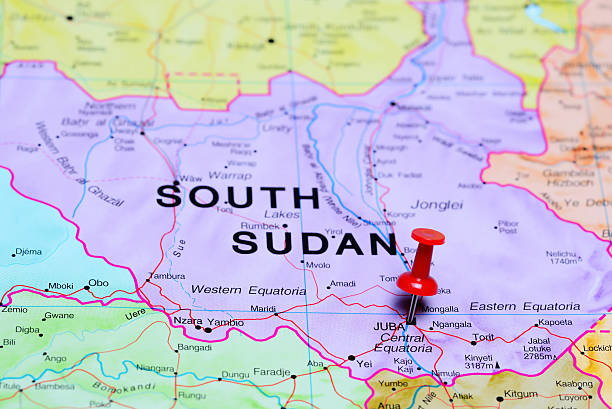
The following is an in-depth analysis of the fintech and wider digital economic development of South Sudan in 2026.
In South Sudan, money often moves slowly. It travels through cash payments, informal traders, personal networks and physical journeys between towns. For much of the population, formal banking remains distant-both geographically and institutionally.
This makes the country’s fintech story less about convenience and more about access. Digital finance is emerging in an environment where basic financial infrastructure is still limited, trust in institutions remains fragile and economic activity is heavily shaped by conflict, displacement and dependence on oil revenues.
South Sudan’s economy this year is projected to reach approximately $6.1billion, with gross domestic product (GDP) per capita of around US$488. It is one of the poorest countries in the world.
Oil remains the country’s dominant export and a major source of government income, while agriculture supports much of the population. Juba is the country’s principal commercial and financial centre, with the Bank of South Sudan responsible for monetary policy and financial regulation, all according to the International Monetary Fund (IMF).
A country where formal finance has limited reach
South Sudan’s financial sector remains small in relation to the size and needs of its population. Bank branches are concentrated in urban centres, while large rural areas continue to operate largely outside the formal financial system. For many households, cash is still the only practical means of payment. Informal savings groups, family networks and local traders often perform functions that banks would provide elsewhere.
This has significant consequences. Without transaction histories, formal accounts or reliable payment records, individuals and small businesses struggle to access credit, save securely or participate fully in the wider economy.
The problem is not simply that banks are unavailable. It is that conventional banking models are expensive and difficult to extend across a country with weak transport links, limited electricity and uneven telecommunications coverage.
Mobile money may matter more than branches
In this environment, mobile money could become South Sudan’s most important route into formal finance.
A digital wallet does not require a large branch network. It can allow users to receive funds, transfer money, pay merchants and store value through a basic mobile device. For populations living far from Juba or other major towns, that distinction is critical.
The Bank of South Sudan has increasingly engaged with telecommunications providers to strengthen digital payments. Early this year, it held discussions with MTN South Sudan on expanding the reliability and reach of MTN MoMo, with emphasis placed on consumer protection, system resilience and wider financial inclusion.
If mobile money adoption expands, many South Sudanese could encounter formal financial services through a telecommunications platform before ever entering a bank.
Modern payment infrastructure behind the scenes
Aerial of Juba, the capital of South Sudan, with the river Nile running in the middle. Juba downtown is upper middle close to the river, and the airport can be seen upper left. The picture is from the south to the north. IMAGE SOURCE GETTY
While mobile wallets are the visible side of digital finance, South Sudan is also investing in the systems that allow institutions to move money securely.
The Bank of South Sudan has made development of the National Payment System a priority, with the aim of creating interoperable infrastructure for electronic transfers, merchant payments and settlement between financial institutions.
This past May, the central bank and Ministry of Finance reviewed progress on a Real-Time Gross Settlement system intended to improve the speed, transparency and security of government and interbank payments.
These reforms may seem distant from everyday consumers, but they are fundamental. Without dependable settlement systems, digital wallets and electronic-payment services cannot scale safely.
Digital payments could support more than consumers
South Sudan’s need for digital finance extends beyond personal banking. Electronic payments could improve the delivery of government salaries, humanitarian assistance and social transfers, particularly in areas where cash distribution is costly or insecure. Digital systems could also strengthen tax collection, reduce leakage and make public payments easier to track.
For small businesses, digital transactions could create a basic financial record. Over time, that record could help merchants demonstrate revenue, manage cash flow and qualify for financing.
Agriculture is another potential area of impact. Farmers and traders could use digital payments to receive money more quickly, reduce dependence on cash and improve links with buyers and suppliers.
Oil wealth has not created broad financial access
South Sudan’s oil resources give the country substantial economic potential, but dependence on a single commodity has also made public finances vulnerable to disruption.
Oil revenues have not translated into widespread access to banking, affordable credit or reliable payment services. The formal economy remains narrow, while many households depend on subsistence activity and informal trade.
The IMF has repeatedly stressed the importance of institutional reform, economic diversification and stronger public financial management. These priorities are closely linked to fintech development. Digital finance can support transparency and inclusion, but only when accompanied by stable institutions and credible regulation.
Trust will determine adoption
South Sudan’s greatest fintech barrier may not be technology. Consumers must trust that digital balances are safe, transactions will be completed and providers will remain operational. Network outages, fraud, weak consumer protection or sudden regulatory changes could quickly undermine confidence.
Digital-finance expansion will therefore depend on more than mobile coverage. It will require financial literacy, effective supervision, reliable infrastructure and clear rules for banks, payment providers and mobile-money operators.
The Future in South Sudan
South Sudan is unlikely to develop a large fintech start-up ecosystem in the immediate future. Its more urgent task is to make everyday payments safer, faster and easier to access.
If mobile money expands and national payment infrastructure becomes more reliable, digital finance could gradually reduce dependence on cash and connect more households and businesses to the formal economy.
For South Sudan, fintech will not be defined by disruption. Its value will lie in creating connections where few currently exist.
