
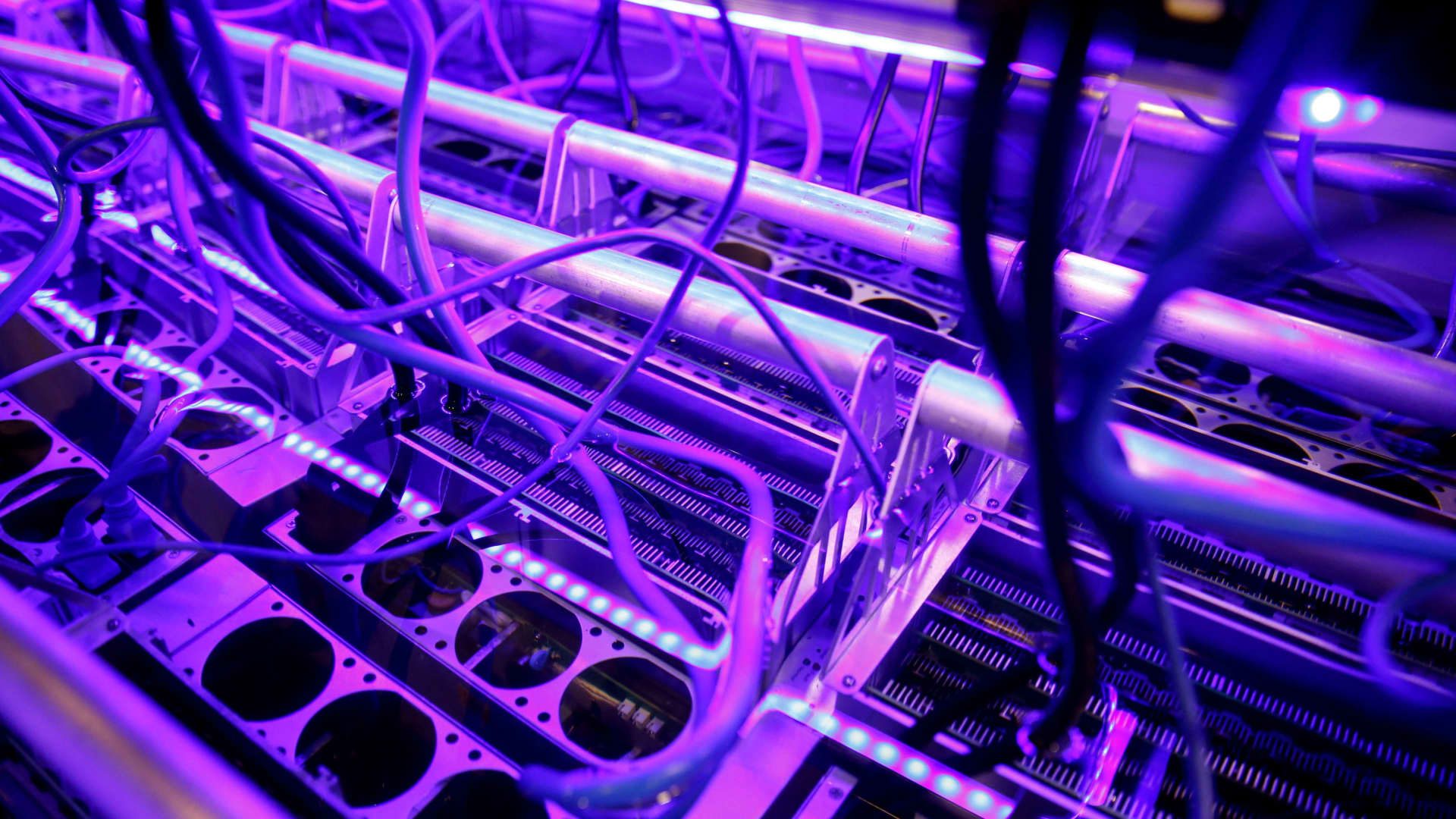
Most bitcoin miners are no longer profiting from their digital asset-related operations as the flagship cryptocurrency falls further into the red, according to a new analyst note from Rosenblatt. Bitcoin was last trading at $64,143, down roughly 26% year to date. Earlier on Tuesday, the token sank just below $63,000, dropping near its lowest level in more than two weeks. BTC.CM= YTD mountain Bitcoin in 2026 via CoinMetrics The crypto’s latest slides could deepen a reemerging threat to most bitcoin miners, Rosenblatt analysts noted. “With [the revenue earned on mining] now under [3 cents], it is down to levels that are unprofitable for all but the most efficient operations” Rosenblatt analyst Chris Brendler said Monday in a note to clients. Crypto mining is the energy-intensive process of earning tokens — in many cases, bitcoin — by verifying digital transactions on a computer network. The bitcoin hash price refers to the revenue generated by miners on a per-terahash basis. But as bitcoin takes a beating, so too has its network’s hash price, leaving miners with nothing to show for their hard work. Bitcoin’s hash price is down about 30% over the past three months, roughly aligning with the decline in the value of the asset, according to data from Hashrate Index . Its hash price was last hovering around $28 per terahash per second per day, per Hashrate Index. “Bitcoin mining economics have gone from bad to worse,” Brendler wrote in the note. “The record low hash prices that pressured our earnings forecasts in December now look enviable compared to the situation today.” As a result, some mining firms are being dragged deeper into the red. Bitmine Immersion Technologies has declined 29% in 2026, while MARA Holdings and CleanSpark are down 13% and roughly flat over the same period, respectively. However, other miners are already turning to an alternative business that could help lift them out of their losses: high-performance computing services, or HPC. For example, Cipher Mining and TeraWulf are two names that are recalibrating their bitcoin-centered operations to run HPC systems for processing data and solving complex calculations at high speeds. “With HPC economics still improving amid increased demand from the hyperscalers, we think all miners should now be actively transitioning from BTC to HPC if at all possible,” Brendler wrote. The analyst noted that Rosenblatt’s cap-weighted bitcoin mining index is down just 2% year to date, largely due to miners’ turn toward HPC to offset their losses from digital asset mining.
Trending
- The OeNB’s Martin Kocher on the Eurosystem’s inflation outlook
- Fortenova to sell Serbian retail businesses to Alta Retail
- Kylie Jenner sells California mansion for $5 million below asking
- My husband and I are in our 50s and have no kids. We have $2 million. Do we need a will?
- The Fed Just Hiked Rates for the First Time Since 2023. 3 AI Stocks That Could Feel It Most
- Federal Reserve Board – Federal Reserve Board issues enforcement actions with former employee of Northstar Bank, former employee of American Express Travel Related Services Company, Inc., and former employee of Regions Bank
- Google Gemini AI Predicts an Explosive End to 2026 for XRP
- Unpacking the Stock Market’s Coiled Spring Set Up


Monday, September 21
