


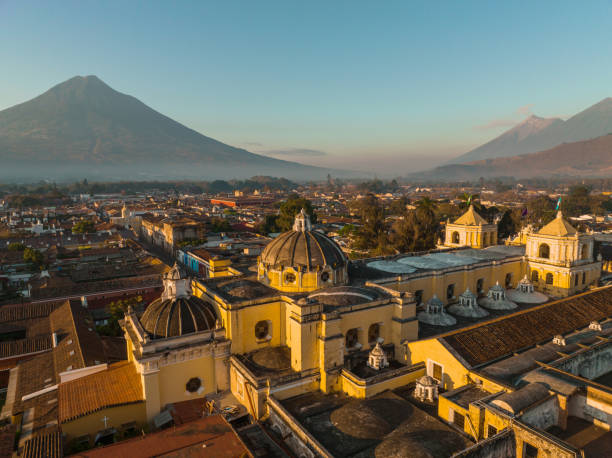
The following is the fintech and wider digital developments in 2026 of the Central American nation of Guatemala.
Guatemala’s financial technology story begins not in a bank branch, but in the movement of money across borders. Every year, millions of Guatemalan families receive financial support from relatives working abroad, particularly in the United States. These remittance flows are not a marginal part of the economy. They are one of its defining features, supporting household consumption, education, housing and small businesses across the country.
That reality makes Guatemala different from many fintech markets. Here, the opportunity for digital finance is not only about mobile wallets, e-commerce or startup innovation. It is about whether technology can make the financial lives of ordinary households, informal workers and small entrepreneurs more affordable, more secure and more connected to the formal economy.
Guatemala remains Central America’s largest economy, with a diverse base that includes agriculture, textiles, manufacturing, food processing, tourism, trade, construction and services. According to the World Bank, gross domestic product (GDP) reached around $113.2billion in 2024, while GDP per capita stood at over $6,100 USD. Guatemala City remains the country’s financial, commercial and technology centre, home to major institutions such as Banco Industrial, Banrural, BAC Guatemala and Banco G&T Continental.
Yet beneath this economic scale lies a more complex reality. Guatemala continues to face deep inequality, high informality and significant rural development gaps. Many households remain outside the formal financial system or use formal services only occasionally. For fintech, this creates both a challenge and an opportunity.
The remittance corridor is the most obvious place to start. The World Trade Organization’s (WTO) 2025 trade policy review of Guatemala noted that family remittances accounted for 18.9 per cent of GDP in 2024, underscoring their central role in private consumption and poverty reduction. The International Monetary Fund (IMF) also noted in its 2025 Article IV consultation that remittances stabilised at around 19 per cent of GDP, while international reserves stood at $24.4billion at the end of 2024.
Zunil, Guatemala – July 14, 2025: People selling vegetables in the wholesale market in Zunil, Quetzaltenango, Guatemala IMAGE SOURCE GETTY
This matters because remittances are increasingly becoming digital. Historically, receiving money from abroad often meant visiting a cash payout location. While cash remains important, digital wallets, bank transfers and mobile-enabled services are gradually changing how remittances are received and used. If those inflows can be linked more effectively to savings, payments, credit histories and insurance products, remittances could become more than household support. They could become an entry point into broader financial inclusion.
That is where fintech can play a meaningful role. Guatemala’s financial inclusion challenge is not simply about whether people have access to a bank account. It is about whether financial services are useful, affordable and trusted. The World Bank’s Global Findex remains the key global benchmark for measuring account ownership, digital payments and financial inclusion. Latin America and the Caribbean, account ownership has improved, but many people still rely heavily on cash, informal credit and physical channels.
In Guatemala, informality remains a major barrier. Small merchants, market vendors, rural producers and micro-entrepreneurs often operate outside formal financial networks. Without transaction histories, many struggle to access credit. Without affordable digital payments, they remain dependent on cash. Without digital tools, bookkeeping, inventory management and tax compliance can remain difficult.
Fintech can help address these constraints, but only if solutions are designed around local realities. Digital payments are therefore central to Guatemala’s fintech future.
According to the US International Trade Administration (ITA), Guatemala’s fintech industry grew from five fintech companies to 31 over a five-year period, representing growth of more than 400 per cent, with opportunities concentrated in digital payments, digital credit and corporate finance management. ITA’s 2026 country commercial guide noted that digital payments in Guatemala were expected to reach $12.7billion in 2025, reflecting the growing importance of electronic transactions in the economy.
This is a significant shift for a market where cash remains deeply embedded. Payment innovation in Guatemala has several layers. Banks are expanding mobile and online channels. Telecom-linked wallets are supporting everyday transfers and top-ups. Payment processors are helping merchants accept cards, QR payments and online transactions. E-commerce growth is increasing demand for secure and convenient payment options.
One of the more visible examples is Tigo Money, a mobile wallet linked to telecom operator Tigo, which allows users to make payments, transfers and top-ups from their mobile phones. Banco Industrial has also been active in digital banking and wallet-related services, reflecting how traditional banks are increasingly becoming part of the digital finance ecosystem rather than standing apart from it.
Other fintech and digital finance-related players include Kushki, which operates across Latin America in payments infrastructure, and regional payment technology providers serving merchants in Guatemala’s expanding digital commerce sector. While Guatemala’s fintech ecosystem is still smaller than those of Mexico, Brazil or Colombia, its growth trajectory reflects rising demand for payment modernisation.
Regulation will be important. Electronic wallets and digital payments require legal clarity around licensing, consumer protection, data handling, anti-money laundering compliance and settlement mechanisms. E-wallets in Guatemala operate as technology tools allowing users to store and transfer money through digital platforms, often funded by cards or cash payments through authorised channels.
The role of Banco de Guatemala (the central bank) is therefore central. The central bank provides economic and financial data, oversees monetary stability and plays an important role in the broader financial infrastructure of the country. As digital payments expand, continued modernisation of payment systems and regulatory coordination will be essential to ensure innovation develops safely.
Open banking could become one of the next frontiers. While Guatemala is not yet at the stage of more advanced open finance markets, conversations around secure data sharing, digital identity and financial interoperability are likely to grow. For consumers and small and medium enterprises (SMEs), open finance could eventually support better credit scoring, personalised financial products and more competition among providers.
SMEs may be the most important segment. Guatemala’s economy depends heavily on small businesses. Many need easier ways to accept payments, access working capital, manage cash flow and formalise operations. Digital payment histories could help lenders better assess risk, while merchant tools could improve business management. For micro and small businesses, even basic digital finance can have a meaningful impact.
Agriculture is another area where fintech could become more relevant. Coffee, sugar, bananas, cardamom and other agricultural exports remain important to Guatemala’s economy. Rural producers often face challenges accessing credit, insurance and efficient payment channels. Digital finance could help connect farmers to buyers, facilitate payments within value chains and support climate-related risk tools over time.
There is also a social dimension. Guatemala has a large indigenous population, and many rural communities face structural barriers related to language, geography, education and infrastructure. Fintech will only be inclusive if it accounts for these realities. Mobile-first services, agent networks, simple user interfaces and financial education will matter as much as technology itself.
Cybersecurity and fraud prevention will also become increasingly important. As more people use digital wallets, online banking and electronic payments, trust must be protected. A single negative experience can discourage users who are new to formal digital finance. Financial institutions, fintech firms and regulators will therefore need to invest in consumer protection, dispute resolution and digital literacy.
The opportunity is clear, but so are the constraints. Guatemala still faces infrastructure gaps, uneven internet access, cash dependency and limited financial literacy in some communities. Fintech firms may struggle to raise capital or scale beyond urban users. Banks may be cautious about opening systems to new players. Consumers may hesitate to move away from cash if digital services are perceived as expensive or unreliable.
Nevertheless, Guatemala has several advantages. It has a large domestic market by Central American standards, major remittance inflows, an increasingly digital consumer base, strong commercial banks and a growing fintech ecosystem. It also has a clear economic need for more efficient payments, SME finance and financial inclusion.
Ultimately, Guatemala’s fintech story is not about becoming the next regional unicorn factory. It is about whether digital finance can transform the country’s most important financial flows. The include: remittances, merchant payments, SME finance and everyday transactions. How can they be tools for broader economic participation?
For Guatemala, fintech’s greatest value may lie in connection: connecting remittance recipients to formal finance, small businesses to digital payments, rural communities to accessible services and a largely cash-based economy to a more inclusive financial future.
