


The price of oil grabs most of the energy-related attention during conflicts in the Middle East for understandable reasons: oil is the commodity on which the world runs (still) and analysts have roughly reliable models for what every $10 per barrel increase in cost does to global growth and inflation.
So, on that front, one can say we’re still a long way from “oil shock” territory. Monday’s rise to $79 a barrel, up 9% since the end of last week, is sizeable, especially as the price was $62 at the start of this year, but remember that $125 was seen shortly after Russia’s invasion of Ukraine in 2022 and $100-plus was then sustained for three months.
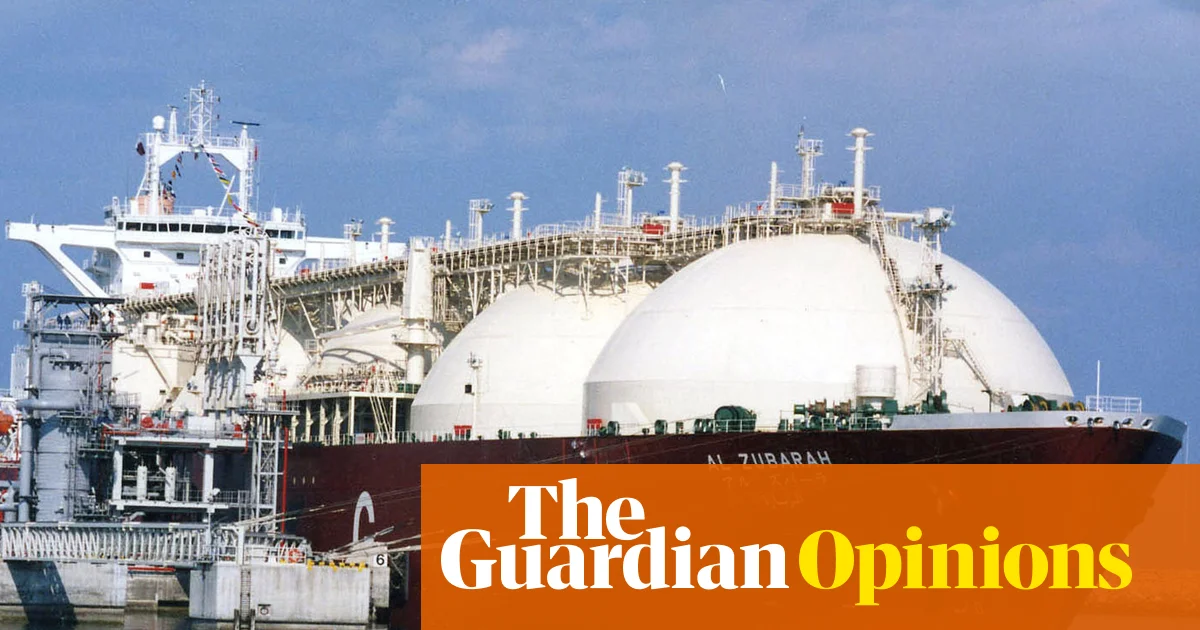
A gas shock, however, looks a real and present threat. European wholesale gas prices rose 50% as QatarEnergy, the world’s largest producer of liquefied natural gas (LNG) halted production after being targeted by Iranian drone strikes. That is 20% of the world’s LNG going offline at a stroke, which would be a fundamental change in the market if sustained for a long period. And the key point is that Qatari LNG cannot be diverted via pipeline, as Saudi oil can be to a degree; it has to go through the pinchpoint of the strait of Hormuz, where shipping has more or less stopped.
A Goldmans Sachs analyst said the price rise for gas in Europe could hit 130% if flows through Hormuz were disrupted for a whole month – “a threshold that triggered large natural gas demand responses during the 2022 European energy crisis”. Stifel’s analyst put it more bluntly: “Attempting regime change in Iran risks a repeat of Europe’s 2022 energy crisis, just worse the second time around.”
Europe – and Asia – are indeed in the eye of the LNG storm because they are the big buyers of the frozen gas. About a quarter of Europe’s gas supply came as LNG in 2025; Britain’s average has been 21% over the past five years, according to government statistics. Meanwhile, gas storage levels in Europe are low after a cold winter. The US, by contrast, sits pretty as an LNG exporter after its shale gas revolution over the past couple of decades.
For the UK, there is a small consolation in being less reliant on Qatari LNG than in 2022. Qatar supplied about 6.5% of UK LNG imports over the past year, says the energy analyst Cornwall Insight, compared with about 69% from the US since 2023.
LNG, though, is also a global market in which it is not unknown, especially at times of crisis, for cargoes to be diverted mid-transit from Asia to Europe, or vice versa, because they can get a better price on the other side of the world. As in 2022, higher wholesale prices for gas quickly translate into higher consumer bills.
The key variables, of course, will be how long Qatari production is shut, and how long Hormuz is effectively closed. Even the difference between a week and a month matters. In terms of numbers, UK gas was 75p a therm last Friday and hit 114p on Monday. It would still have to go 250p – and stay there for a while – to match the intensity of the 2022 crisis. But suddenly it is not unimaginable, as Stifel warns, that household energy bills could spike again, causing a fresh set of problems for a government (like the last one) that has placed the reliability and affordability of LNG at the heart of its energy policy.
In its “security of supply” report last year, the government highlighted declining domestic North Sea production of gas but said “over the next four years specifically, we expect this changing supply mix to coincide with a robust, oversupplied global LNG market”. That market looked neither robust nor oversupplied on Monday.
