

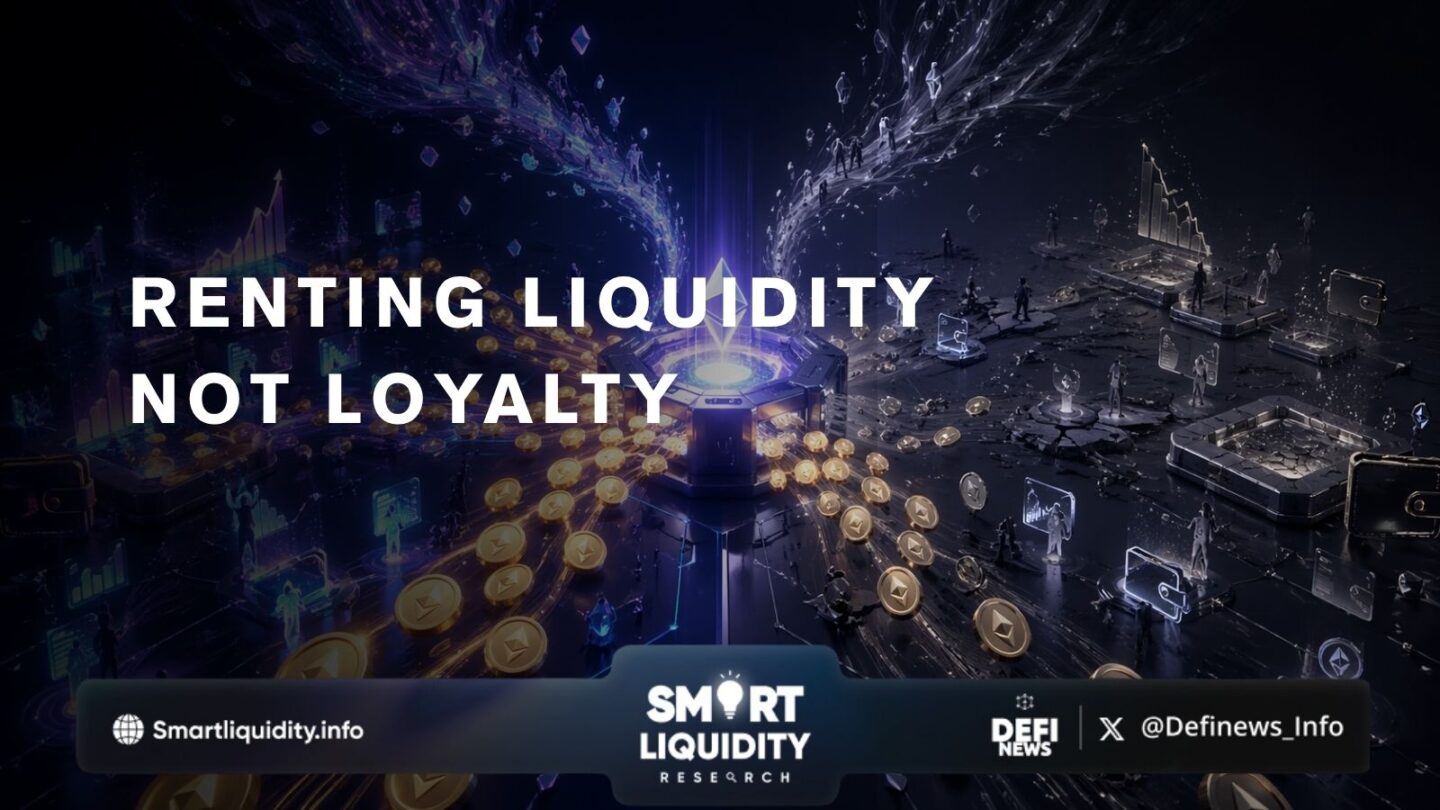
Liquidity mining has long been framed as a cornerstone innovation in decentralized finance—an elegant mechanism to bootstrap liquidity, decentralize ownership, and align incentives between users and protocols. But beneath the narrative, a more familiar pattern emerges: liquidity mining often functions as a form of paid customer acquisition, with tokens replacing traditional cash incentives.
This framing does not diminish its importance. Instead, it clarifies both its strengths and its limitations
Reinterpreting Liquidity Mining
At its core, liquidity mining distributes tokens to users who provide capital or perform activities for a protocol. Whether through supplying liquidity, staking assets, or executing trades, participants are rewarded for behaviors that enhance the protocol’s functionality and attractiveness.
From a business perspective, this resembles a classic growth strategy:
- Incentivize user participation
- Increase platform activity
- Build initial network effects
The only difference is the currency. Instead of spending fiat on ads or promotions, protocols issue native tokens—effectively subsidizing early adoption with future upside.
Paid User Acquisition, Repackaged
Traditional startups allocate significant budgets to acquire users through marketing campaigns, referral bonuses, and discounts. Liquidity mining mirrors this approach, but with a structural twist:
- Tokens as incentives: Users are compensated directly in protocol-native assets
- Lower upfront cost: Instead of depleting cash reserves, protocols dilute token supply
- Speculative appeal: Rewards are not just payments—they are perceived investments
This creates a powerful feedback loop. As long as token prices remain stable or increase, participation appears profitable, attracting more users and reinforcing growth.
However, the mechanism is not fundamentally different from paid acquisition—it is simply more capital-efficient in the short term.
Temporary Engagement Spikes
Liquidity mining programs are highly effective at generating rapid traction. When rewards are attractive, capital flows in quickly, often producing dramatic increases in:
- Total Value Locked (TVL)
- Trading volume
- User activity
These spikes can create the appearance of strong product-market fit. Yet, much of this activity is incentive-driven rather than organic.
Participants, particularly sophisticated users, optimize for yield. They allocate capital where rewards are highest and withdraw it just as quickly when incentives decline. This behavior introduces a critical dynamic: engagement is often rented rather than earned.
The Retention Problem
The most significant challenge emerges when rewards taper off.
Without continuous incentives, many users disengage, leading to:
- Declining liquidity
- Reduced trading activity
- Increased volatility in protocol metrics
This reveals a fundamental issue: liquidity mining does not inherently create loyalty. It attracts capital, but it does not guarantee that capital will stay.
In traditional terms, this is equivalent to acquiring users who churn as soon as discounts disappear.
Token Emissions as a Cost
While liquidity mining avoids immediate cash expenditure, it is not free. Token emissions represent a form of cost—one that is often less visible but equally impactful.
Key considerations include:
- Dilution: Increased token supply can suppress long-term value
- Sell pressure: Recipients frequently sell rewards, affecting price stability
- Sustainability: Continuous emissions may be required to maintain engagement
In effect, protocols are paying for growth, just as traditional companies do—only the cost is denominated in equity-like instruments rather than cash.
When Liquidity Mining Works
Despite its limitations, liquidity mining can be highly effective under the right conditions. It performs best when:
- The underlying product delivers genuine utility
- Incentives are used to accelerate, not replace, organic adoption
- Token design aligns long-term participation with protocol success
In these cases, liquidity mining acts as a catalyst—helping a protocol reach critical mass before transitioning to more sustainable growth drivers.
Toward Sustainable Incentive Design
The next evolution of liquidity mining lies in improving retention and reducing reliance on continuous emissions. Emerging approaches include:
- Time-weighted rewards that favor long-term participation
- Revenue-sharing mechanisms that tie rewards to real protocol income
- Dynamic incentive systems that adjust based on user behavior and market conditions
These models aim to shift the focus from short-term attraction to long-term alignment.
Finale
Liquidity mining is not a flawed concept—it is a misinterpreted one. At its essence, it is a sophisticated form of customer acquisition, optimized for decentralized systems and powered by token economics.
The challenge is not whether to use it, but how to use it responsibly. Protocols that recognize liquidity mining as a cost of growth—and design accordingly—are far more likely to convert temporary participation into lasting ecosystems.
Because in the end, incentives can bring users in. Only real value makes them stay.
REQUEST AN ARTICLE
