


Unlock the Editor’s Digest for free
Roula Khalaf, Editor of the FT, selects her favourite stories in this weekly newsletter.
British parliamentary by-elections are generally poor indicators of national contests but very good at giving you the state of the parties today.
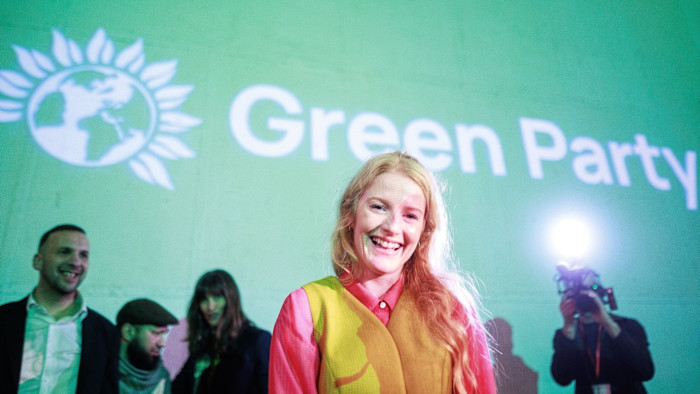
By that measure Prime Minister Sir Keir Starmer’s Labour government has a great deal to worry about after the Green party’s victory in a parliamentary by-election in what was supposed to be a Labour stronghold in Manchester. The Gorton and Denton contest delivered a stunning win for the small party and one that points to the further fragmentation of British politics. Under a new party leader pursuing arguments influenced by Zohran Mamdani’s New York mayoral campaign, the Greens have moved closer to establishing a viable populist left force in British politics.
Labour fell to third place, behind both the Greens and Nigel Farage’s Reform UK. The result points to disastrous results for Labour in May’s Scottish and Welsh parliamentary and English council elections. It will lead to renewed pressure for a change of leadership. The outcome is also a warning for Reform. Although this seat would not normally be a prime target, Nigel Farage, who leads the party, should be troubled that his ever-rightward drift is being met by voters increasingly searching for the best way to stop him winning.
While much of Labour’s strategic focus has been on the Reform threat, it has been losing far more voters to parties of the left. Labour MPs are now demanding a new approach, not least because the Greens’ win also weakens the party’s most potent political argument — that it alone can stop Reform.
By pursuing disaffected left and Muslim voters disillusioned by the Labour government’s line on Gaza, the Greens are hollowing out Labour’s base of support. With their added appeal to young people they pose a particular threat in inner-city areas. The new Green MP Hannah Spencer, a young female plumber, also appealed directly to white working-class voters.
The defeat is all the more damaging for Starmer because he blocked the candidacy of Labour’s charismatic Manchester mayor, Andy Burnham, to prevent him challenging for the Labour leadership. May’s elections are likely only to increase his lame-duck status and fuel the demands for a change. Starmer hopes next week’s spring financial statement will highlight more encouraging economic news. But voters are yet to feel the change he promised and a series of political retreats do not instil confidence that he can deliver.
Starmer will now face demands for Labour to tack further left by spending and borrowing more and increasing wealth taxes. The danger here is that this weakens a push for growth already hampered by higher business taxes and regulation. No Labour recovery is possible without an economic one.
For the Greens, success will rightly see greater scrutiny, not least of their ill-conceived economic policies and the sectarian politics which marked their courting of Muslim voters. But the message is that the populist left has firmly arrived in the UK. British electoral politics will now become even more a patchwork of local contests with parties needing far smaller vote shares to win and elections decided by tactical voting. Labour and the Conservatives find themselves squeezed between the Greens and Reform (as well as nationalists in Scotland and Wales) at a time when both are unpopular.
This is perhaps the biggest concern following the Greens’ success. The worry for those who fear Reform is that while the populist left can win in local or regional elections, they are not an adequate safeguard against the populist right at a national level. Those who want moderate, inclusive, economically sane politics need at least one of the two major parties to get their act together and quickly.
